
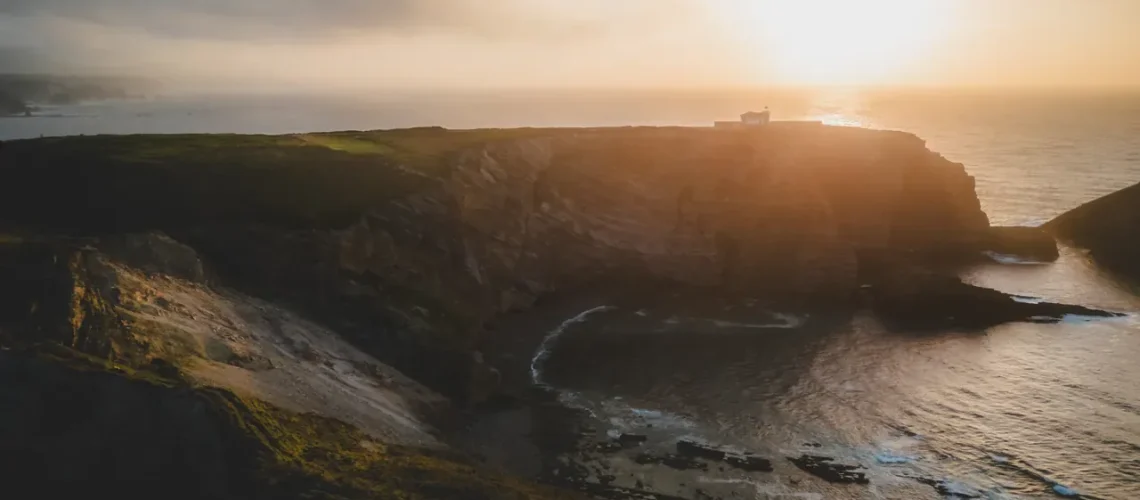
Cudillero is much more than its harbour of hanging houses. The municipality brings together cliffs, unhurried beaches, villages and valleys that are best explored without rushing. We are a family farm in San Martín de Luiña, in western Asturias, and this is the guide we would give a friend coming to spend a day or two here. It includes what to see in Cudillero, where to eat, what to do if it rains and a slot to visit the farm.
What to see in Cudillero village
The village is the essential stop. According to Turismo Asturias, it is a fishing village built like an amphitheatre above the sea, with narrow streets, fishermen’s houses and curadillos (dried fish) hanging in the air. It is best to arrive early, leave the car outside and walk down to the harbour.
- The harbour and the streets. You can walk them in a good hour if you stop to look around and have a drink.
- The viewpoints. The route through the village passes viewpoints such as La Garita and La Atalaya, from where you can see the rooftops and the sea.
- The lighthouse. It is a recommended walk that Turismo Asturias suggests for getting to know the village.
If you are wondering what to see in Cudillero with little time, the village, a viewpoint and a beach in the municipality make a good morning.
Where to eat in Cudillero and around
In the village you will find bars and restaurants right on the harbour hillside. We cannot speak for all of them, but we can speak about three places in the municipality that cook with our faba and that we know well.
- Casa Vieja del Sastre, in Soto de Luiña.
- Restaurante Valle de las Luiñas, in Soto de Luiña.
- Restaurante Cabo Vidio, in Valdredo.
If you want a fabada made by people who know how, these three are a safe bet. You can see more places and chefs who work with produce from the farm on the restaurants and chefs page. It is wise to book, especially at weekends and in summer. And if you prefer to cook yourself, here is the shop with our fabas.
Playa del Silencio
It is one of the most sought-after beaches in the municipality and also one of the most photographed. It is shell-shaped, less than 500 metres long and surrounded by cliffs and islets, with fine sand mixed with pebbles. Asturias.com describes it as a protected space. Guides such as the one from Barceló warn about what matters. There are no toilets, bars or lifeguards, and you get there by a short walk, so it is not suitable for people with reduced mobility.
Bring water, comfortable shoes and something to eat. And check the state of the sea before going down. It is a beach for looking and walking, with respect, rather than for planting the parasol all day.
Cabo Vidio and its lighthouse
Cabo Vidio is about 10 kilometres from Cudillero, in the parish of Oviñana. It is one of the great capes and cliffs of the Asturian coast and its cliff rises about 80 metres above the sea. From there you can see the lighthouse and, on clear days, Estaca de Bares and Cabo de Peñas.
- La iglesiona. It is a cave carved by the waves that can only be visited at low tide. Check the tide tables and do not take risks.
- The circular route. There is a trail past viewpoints with views of cliffs, caves and breakers.
- Peñadoria. A wild beach next to the cape, in a spectacular setting.
In the area there is also Restaurante Cabo Vidio, in Valdredo, a good way to end the outing sitting at a table.
Soto de Luiña, our valley
Soto de Luiña is the village that gives its name to the Luiñas valley and is a few kilometres from the beach of San Pedro de la Ribera. Its church of Santa María stands out and it is a stage on the Camino de Santiago del Norte. According to Turismo Asturias, there is a market in the village on the first Saturday of each month. If it coincides with your visit, it is a good morning plan. For where to find us, see the markets and fairs page.
Oviñana and La Concha de Artedo
Oviñana is a coastal parish spread over several settlements, among them Riego Abajo, Riego Arriba and Vivigo. San Roque is celebrated here on 16 August. It has quiet villages and is the gateway to the Cabo Vidio area.
La Concha de Artedo is, according to asturias.com, the most popular beach in the municipality. It is easy to reach, rural in feel and with very clean water, and it has been a stop for pilgrims on the Camino de Santiago. It lies between Cudillero and Luarca. It is the most comfortable option if you are with children or do not want to walk.
Muros de Nalón and Luarca, to go beyond the municipality
Muros de Nalón borders Cudillero to the east and works for a short getaway to the other side of the municipality. Luarca lies to the west, following the coast, and deserves a whole day if you have time to spare. It is better to plan it as a full day trip than as a quick stop. Check the driving time on the map from where you are staying, because it varies quite a lot depending on the starting point.
What to do in Cudillero if it rains
In Asturias the rain arrives without warning, so it pays to have a plan B.
- Palacio de los Selgas. The palace complex in El Pito holds an art collection. The visit is managed with the Fundación Selgas-Fagalde, so check their information before going.
- Shops and bars in the village. Cudillero can be enjoyed in a raincoat too.
- A long lunch. A fabada in Soto de Luiña or in Valdredo feels very good on a grey day.
- The farm visit. It is a guided visit and you must book first on the website. If the weather is very bad, write to us beforehand and we will tell you how the day looks.
A plan for one or two days
If you have just one day
- In the morning, farm visit at 12:00 with prior booking.
- Lunch in Soto de Luiña, at Casa Vieja del Sastre or at Valle de las Luiñas.
- In the afternoon, Cudillero village and its lighthouse.
If you have two days
- First day. Cudillero village in the morning, lunch in Soto de Luiña and Playa del Silencio late in the afternoon if the sea is calm.
- Second day. Cabo Vidio and Oviñana in the morning, lunch in Valdredo at Restaurante Cabo Vidio and farm visit at 17:30.
The visit to Finca El Ribeiro
Guided visits take place at 12:00 and at 17:30, always with booking on the Finca El Ribeiro visit page. Our family farm has existed since 2007 and the first faba harvest was in 2009. We grow, dry and pack Faba Asturiana PGI of the Granja Asturiana variety under our own brand, and part of the faba and of the blueberries is organic (COPAE). If you come between August and November, roughly, it is fresh blueberry season.
It is a visit designed for those who want to understand where their food comes from, without rushing and with whatever questions you like. And if you take faba home, remember that authentic Faba Asturiana PGI is never sold loose.
Frequently asked questions
What to see in Cudillero in one day?
The village and its harbour, a viewpoint such as La Garita or La Atalaya, the lighthouse and a beach in the municipality, such as La Concha de Artedo or Playa del Silencio. If you have the afternoon free, add Cabo Vidio.
Where to eat in Cudillero?
In the village there are bars and restaurants by the harbour. In the municipality, three places that cook with our faba are Casa Vieja del Sastre and Restaurante Valle de las Luiñas, in Soto de Luiña, and Restaurante Cabo Vidio, in Valdredo.
What is the access to Playa del Silencio like?
You get there by a short walk and there are no toilets, bars or lifeguards. It is not suitable for people with reduced mobility. It is wise to go with comfortable shoes and check the state of the sea.
What to do in Cudillero if it rains?
You can visit the Palacio de los Selgas in El Pito, wander the shops and bars of the village, have a long lunch with fabada or come to the guided visit of the farm. All with prior booking when necessary.
Can the farm be visited?
Yes, with prior booking on the website. Guided visits are at 12:00 and at 17:30.