If you have ever ordered a fabada, you will have heard the word compango. It is the part of the dish that is not faba and gives it its character. In this guide we explain what it is, which pieces it includes and how to use it so your fabada comes out balanced. We are Finca El Ribeiro, a family farm in San Martín de Luiña, in Cudillero, and we grow, dry and pack our own Faba Asturiana PGI.
What is compango
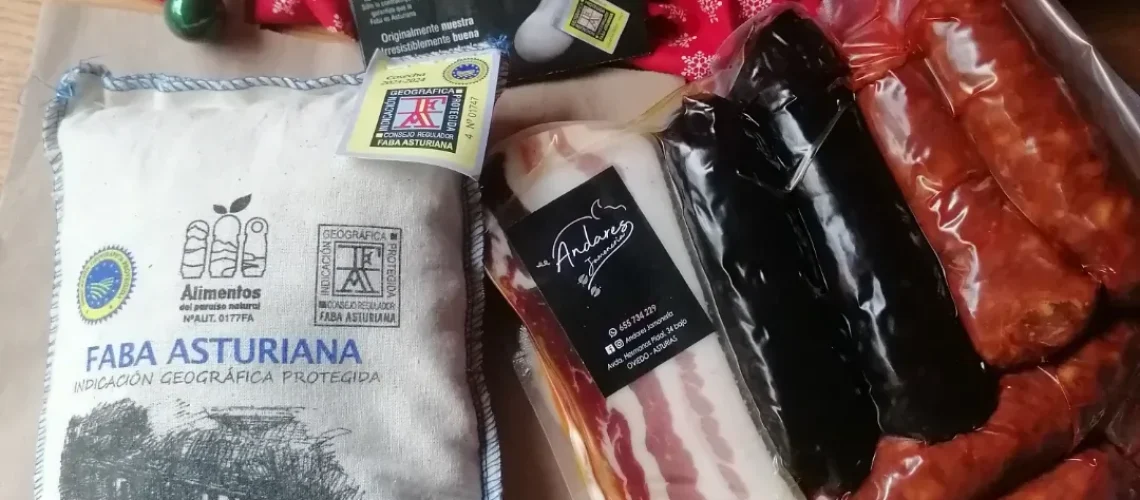
Compango is the set of sausages and cured meats that go with the fabes in fabada and in pote asturiano. The word comes from «companaje», what you eat together with bread, and in Asturias it names the group of pieces that cook with the legume. It adds flavour, fat and salt to the broth, so the faba can stay simple and creamy while the stew still has plenty of body.
Which pieces it includes
- Asturian chorizo. The cooking kind, smoked and paprika flavoured. It gives colour and a touch of fat to the broth.
- Asturian morcilla. Made with onion and blood, it is the mildest piece and the most delicate to cook.
- Tocino. Cured pork belly or streaky bacon. It adds richness.
- Lacón. Cured pork shoulder. It is the saltiest piece and the one that flavours the broth best.
Some homes add a rib, a ham bone or a piece of ear. There is no single recipe and each family adjusts the pieces to taste.
How to use compango in fabada
Before cooking
Wash the pieces in warm water. If the lacón or the tocino are very salty, leave them in cold water from the night before, together with the fabas that are also soaking. The chorizo and the morcilla do not need desalting.
While cooking
Put the fabas, the compango and just enough cold water to cover in a tall pot. Bring to medium heat and, when it starts to boil, skim and «scare» with a splash of cold water. Then lower the heat and cook slowly. The morcilla is the most fragile piece, so prick it only if you see it splitting and keep the boil very gentle. You will find every step and timing in our traditional fabada recipe.
Salt
The compango already salts the broth. So taste at the end and add salt only if needed. The most common mistake is to salt at the start and end up with an over salted fabada.
Serving
Take the compango out of the pot, cut it up and serve it on a separate platter or in the bowl, with a little of each piece for every diner. The fabas go in a deep bowl with their broth.
How much compango to use
A reasonable guide for 4 people and 400 g of fabas is 2 chorizos, 2 morcillas, about 150 g of tocino and a piece of lacón. For a lighter fabada, reduce the tocino and the lacón. For more flavour, do not raise the chorizo and the morcilla together, because they hide the faba. The idea is that the faba stays the star.
Compango and the quality of the faba
A good faba with a thin skin and creamy texture takes compango well without breaking. For more on this see our guide on how to cook fabes. Our Faba Asturiana PGI is on the faba page.
Frequently asked questions about compango
What goes into compango for fabada?
Usually Asturian chorizo, Asturian morcilla (blood sausage), tocino (cured pork belly) and lacón (cured pork shoulder). Some homes add a rib or a ham bone. There is no single recipe and every family adjusts the pieces to taste.
How much compango per person?
As a guide, one chorizo and one morcilla per person and 40 to 60 g of tocino. The lacón is shared between everyone. It is a guide, not a rule.
Does compango need to be desalted?
If the lacón or the tocino are heavily salt cured, leave them in cold water for a few hours or overnight. The chorizo and the morcilla do not need it.
Can you freeze compango?
Yes, the chorizo, morcilla and lacón freeze well if wrapped properly. Defrost them in the fridge before cooking.
Can you make fabada without compango?
You can make a fabes stew without it, but it is no longer an Asturian fabada. Without compango it is closer to fabes with seafood or with vegetables.
Put it into practice
With compango clear, the next step is the fabada. You can find all the recipes in one click and the faba in the shop.