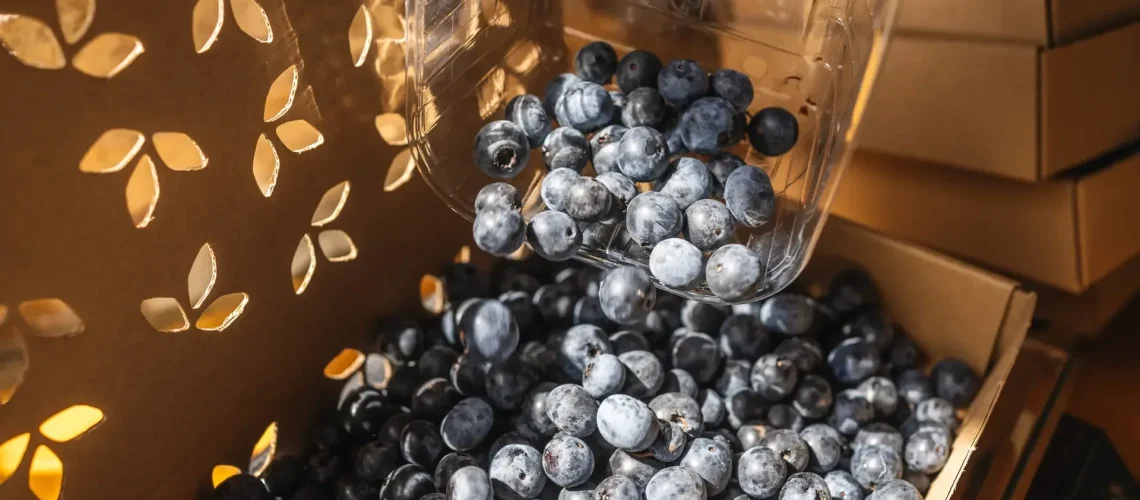
You cannot tell an organic blueberry from a conventional one by looking at it. The difference lies in how it was grown, who inspects it and a code that has to appear on the label. We grow Central Blue blueberries next to our farm in San Martín de Luiña, in Cudillero, with organic certification from COPAE. This is what that seal means in practice, seen from the field.
What makes a blueberry organic
Organic production in the European Union is governed by Regulation (EU) 2018/848. For blueberries, as for any fruit, that comes down to a handful of very specific rules.
- No synthetic chemicals. The rules ban synthetic chemical substances such as pesticides and herbicides.
- No GMOs. Genetically modified organisms are not allowed either.
- Years of transition. For a perennial crop like the blueberry, the plot must go through a conversion period of at least three years before its first harvest can be sold as organic.
- Protected words. Only a certified product can be called organic, eco or bio, or their Spanish equivalents ecológico, biológico and orgánico.
Being organic says how a blueberry was produced. It is not a health promise. What is known about the fruit itself is in blueberry properties and benefits.
Who inspects it in Asturias, COPAE
In Asturias the control authority is COPAE, the Consejo de la Producción Agraria Ecológica del Principado de Asturias. Its code is ES-ECO-012-AS, and it is the code you will see on the label of an organic blueberry certified here.
According to its consumer guide, COPAE inspectors check every operator at least once a year, sometimes without notice. On those visits they may take product samples, which are analysed in accredited laboratories for banned residues such as pesticides.
How we grow our organic blueberries
The plantation sits right next to the farm, covers a little over a hectare and was planted in the winter of 2015. It has around 2,500 plants per hectare, in rows three metres apart with a metre between plants. The variety is Central Blue, an extra-late one, which was a risky bet at the time.
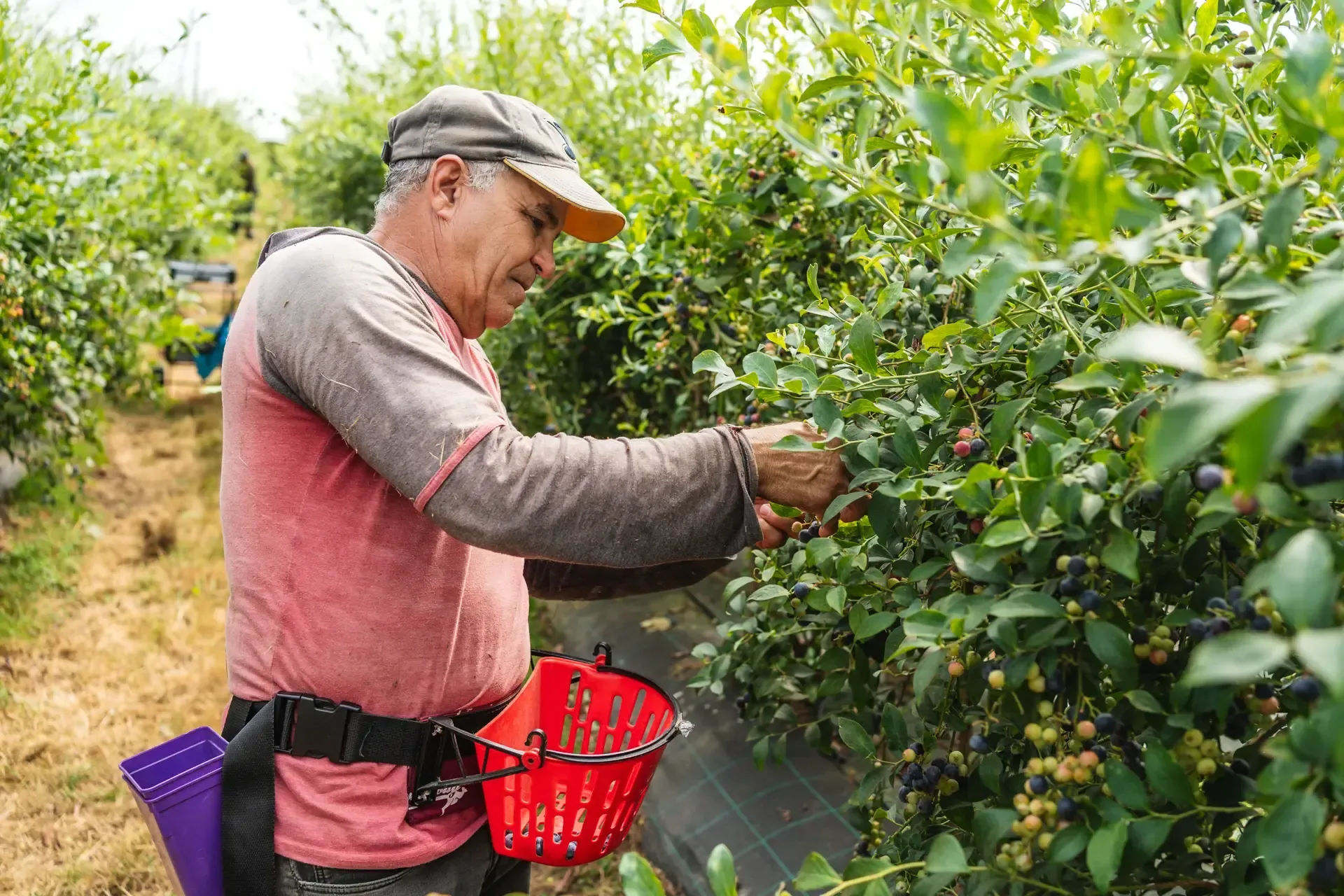
The plant’s year sets the work. Pruning happens in winter. Around early April the bushes are in flower and by the end of that month the fruit is setting. Then comes the wait for summer, and picking is always by hand, one by one, when each berry is ready.
Working organically means giving up chemical shortcuts and putting in more hours. As well as the organic seal, the fresh blueberries hold GLOBALG.A.P. certification, and every year fruit and water samples are taken to renew it.
The technical side of growing them, with acid soil, pollination and pruning, is covered in blueberry growing in Asturias.
The organic blueberry season
Because it is an extra-late variety, picking runs from August to early December depending on the year, when most blueberries have already finished. Outside those months there is no fresh fruit from the farm, but there is jam, including an organic version, and blueberry juice. Some years, at the end of the season, we have opened the plantation so people can pick their own. We tell you about it in picking blueberries in Asturias.
How to choose good organic blueberries
- The label. Look for the European organic logo, the code of the control body and the origin. In Asturias the code is ES-ECO-012-AS. If it is missing, the fruit is not certified organic, whatever anyone says.
- The colour. Deep, even blue, with the whitish coating on top known as bloom. If it has almost all gone, the fruit has been handled a lot.
- The feel. Firm when gently pressed. Soft or wrinkled berries are past their best.
- The punnet. Dry inside, with no juice at the bottom and no mouldy berries.
At home, do not wash them until you are about to eat them. Tips for keeping them in the fridge and freezing them are in the guide to blueberry properties.
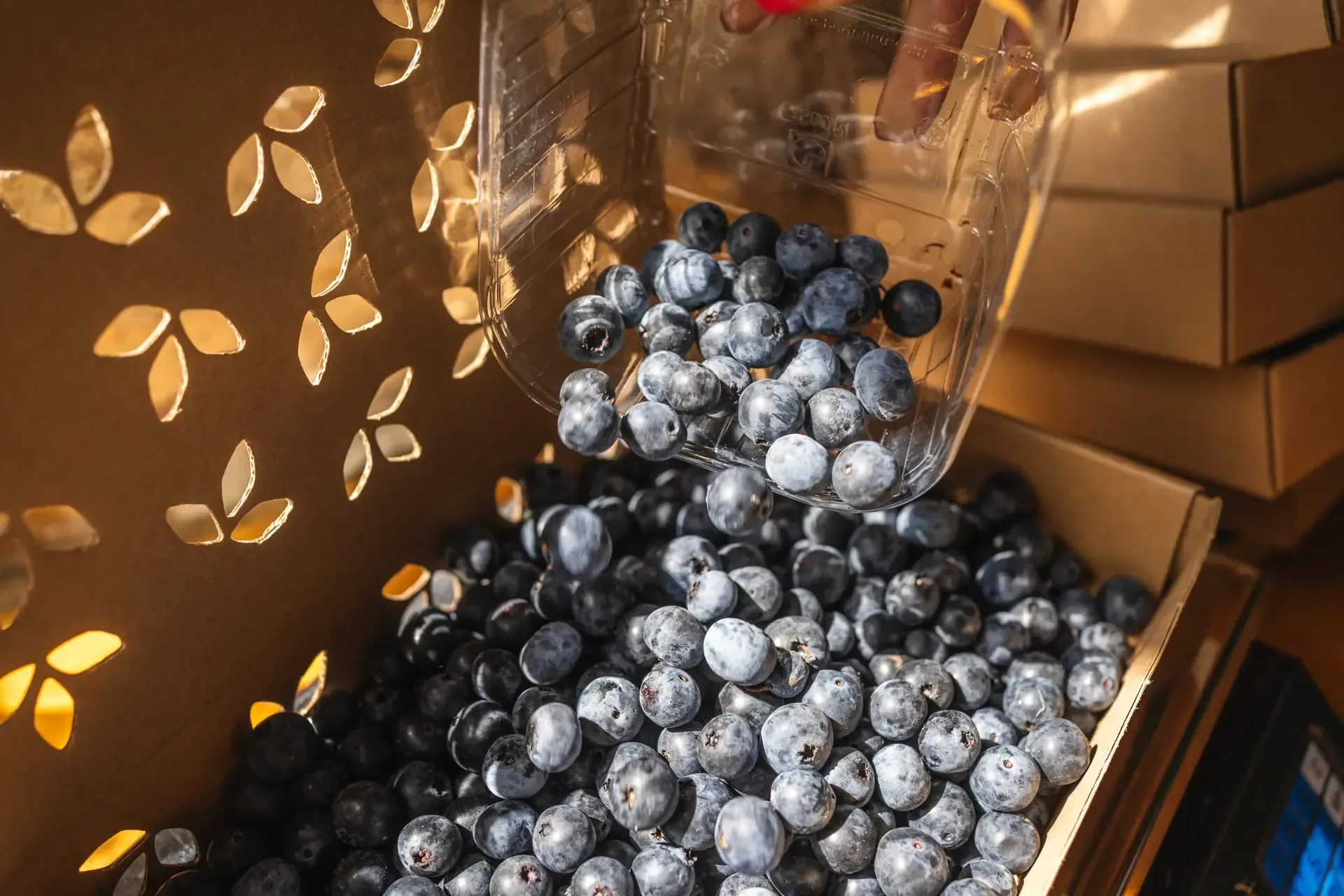
Where to buy our organic blueberries
In season you will find them on the fresh blueberries page and in the blueberry section of the shop. Jam and juice are in jams and juice. They also reach some shops in Asturias and Madrid, listed under points of sale.
And if you would like to see the plantation for yourself, we run guided visits at 12:00 and 17:30, always booked on the Finca El Ribeiro visit page. There is more on how we grow blueberries on our blueberry page.
Sources
- COPAE, consumer guide (in Spanish), on banned substances, labelling, the ES-ECO-012-AS code and inspections.
- Regulation (EU) 2018/848 on organic production and labelling of organic products, on EUR-Lex.
- Government of the Balearic Islands, conversion period under Regulation (EU) 2018/848 (in Spanish), with the periods for perennial crops.
Frequently asked questions
What guarantees that blueberries are organic?
That they have been grown under Regulation (EU) 2018/848, without synthetic chemical substances such as pesticides and herbicides and without GMOs, and that a control body has checked it.
Who certifies organic blueberries in Asturias?
COPAE, the Consejo de la Producción Agraria Ecológica del Principado de Asturias. Its code on the label is ES-ECO-012-AS.
How can I tell whether a blueberry is really organic?
From the label. It must carry the European organic logo, the code of the control body and the origin. Without that code it is not certified organic.
When are there fresh organic blueberries at the farm?
We grow an extra-late variety, Central Blue, so picking runs from August to early December depending on the year.
Is an organic blueberry healthier?
The organic seal guarantees a way of producing food, not an effect on health. If you have questions about your diet, ask a health professional.